
I’ve always been interested in Transcendentalism. It was a trend that began in high school, when I was first introduced to authors such as Henry David Thoreau and Ralph Waldo Emerson. Because of this, I originally planned on attending the Thoreau-Harding lecture by Dr. Spencer Crew out of sheer interest, and debated even writing this response to it. However, Dr. Crew covered topics far beyond my expectations, which prompted me to make this post.
Sex, Power, and Control
The other day, as work for Professor Lytton Smith’s Writing Afrofuturism class, I was asked to listen to Janelle Monae’s album Dirty Computer. This was some of the most entertaining homework I’ve ever had, especially since I still find myself listening on my own. Monae covers a lot of different issues in her album: sexuality, femininity, and race to name a few. If one were to look closely, there’s probably plenty of overlap between both Everett and Monae’s work. However, one line in her song Screwed stood out to me in particular:
“Everything is sex, except sex, which is power.”
*Graphic language and assault mention
The Significance of Community Sings
Everett and Suspicious Pants Irony
The first day of class Professor McCoy introduced us to a tweet called the suspicious pants. That day we were placed into groups and were told to unpack the meaning behind the suspicious pants. As Jessica referred in her blog post titled A Reflection on Suspicious Pants, Professor McCoy told use “Suspicious Pants is all of Percival Everett’s writings in one tweet”. At the time I did not know what this meant, but now two months later I have been able to have further information to allow me to relate the suspicious pants and Everett and what they have in common.
Moving Too Fast
After taking the time to read and enjoy a few blog posts which other classmates had crafted, I came across one that I personally related to. In Lael’s most recent blog post, she discusses a dug-up driveway on Oak Street in the Village of Geneseo. Lael was able to creatively relate the unearthed driveway to the wild Bacchants running into the once controlled city of Thebes. I found this metaphor fascinating and dug deep to find my own interpretation of this specific driveway.
I too happen to be very familiar with Oak Street. I have four great friends that live on the street. Additionally, as a member of the cross-country team, I run down Oak Street at least twice a week to finish up my long runs. I am incredibly familiar with the street’s distance, sidewalk, houses, and general layout. Of course, since I usually approach it as a downhill, it holds an incredibly high place in my runner heart.
Even though I run on Oak street day after day and feel as if know the street well, I did not notice the unearthed asphalt driveway. After reading Lael’s post I was a bit confused. How could I have missed construction on a street that I run down all the time? Continue reading “Moving Too Fast”
The Significance in the Origin of Discipline
Availability to a discipline’s origins, enables a disciple or follower of that discipline to internalize and efficiently wield knowledge provided through the origins—moreover, it allows them to understand the influences of the discipline and how it has developed. The use of archetypal work is useful across several disciplines; autochthonous material displays and presents excellent examples of fundamental techniques necessary in a discipline.
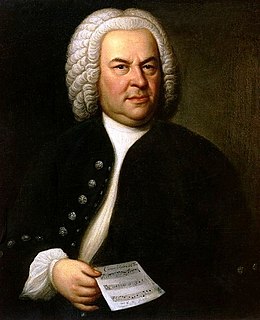
The disciples of music are one excellent example of individuals who learn their discipline effectively through the study of music and its history. Individuals who study music study not only the techniques involved in the analysis and composition of music, but also study the history, which presents the circumstances in which these techniques were developed, as well as how these techniques changed and developed as the study of music continued—simply studying the technique as it is today and neglecting its origins, would not allow someone to obtain an optimal and fuller understanding of how it developed or why it developed and limit their understanding of technique in music.
In the discipline of music, someone might specifically study the shift from monophonic Gregorian chants—Gregorian chant were sung chants the Catholic church practiced in their worship during the Medieval period; the chants were always monophonic which means they were only one line vocal melodies without the use of instrumental accompaniment—to the development of harmony and polyphony, which means multiple voices sung at the same time, and the changes that would arrive with the Renaissance or baroque era (Grout, et al, 2019). Just as disciples of music would study the origins of their discipline, so would the disciples of literature or a specific science. The concept of studying archetypal works can be applied to any discipline in order to obtain a more concentrated understanding of an idea or technique in that discipline—in literature, disciples study the history of literature, and focus on monumental influential authors in literature, just as disciples in music might study the music of Bach or Mozart. Continue reading “The Significance in the Origin of Discipline”
Dionysos and Vlepo: Picaresque Partners
Though as a class we are continuing forward on our journey through Percival Everett’s works and are currently reading I am Not Sidney Poitier, we are still thinkING about the first work we read by Everett: Frenzy. This thinking is in part a necessity since we are to complete a rewrite of our first Frenzy essay by mid-November. However, even when the rewrite of this essay is completed, I believe we will all find ourselves, at one point or another, thinking back to Frenzy. Our reading of Frenzy has impacted us as readers insofar as that it taught us how we should read and why this kind of reading is important.
In class today we were deliberately asked to think back to Frenzy and contemplate its status as a picaresque novel. The Bedford Glossary of Critical and Literary Terms defines a picaresque novel as “a novel that realistically recounts the adventures of a carefree but engaging rascal who always manages to escape by the skin of his or her teeth” (Murfin and Ray, 382). It further stipulates that the picaresque novel be episodic and that these “episodes” feature a consistent central character who is typically the first-person narrator of the novel. Furthermore, picaresque “heroes”, or picaros, represent static characters since they do not learn or grow as a result of their episodic tribulations. Finally, picaresque novels usually convey some kind of satire. This satire often takes form as a “punch-up” to the class system, being that the narrator usually comes from a low social class. Continue reading “Dionysos and Vlepo: Picaresque Partners”
Rethinking Rockwell
Every Sunday morning after attending mass, my grandmother had my siblings and I over for some tea and breakfast. Hung inside of her kitchen was a calendar designed by Norman Rockwell. Art tended to catch my attention as a child, and still does today. Impatiently, I’d flip through the calendar regardless of the current month to preview every illustration. Rockwell worked with such detail. Every line on the paper seemed to have a purpose. People’s emotions were depicted so realistically. I think that it was that realism that me admire Rockwell as an artist.
In middle school, I was shown a short film in art class, which introduced me to the modern artist, Jackson Pollock. Artistically, Pollock seemed to stand as far away from Rockwell as one could imagine. While Rockwell focused on detail, Pollock splatter painted onto canvases. He used an array of colors and his pieces varied in size. It is said that some of his pieces accidentally incorporated flies and other insects. To a middle school student who had cherished Rockwell’s detail-oriented work, Pollock’s art was something unique and new. His abstraction said spoke to me, and from what it seemed, multiple others. In fact, Pollock’s art seemed to challenge Rockwell.
In high school, I came across the following photo:
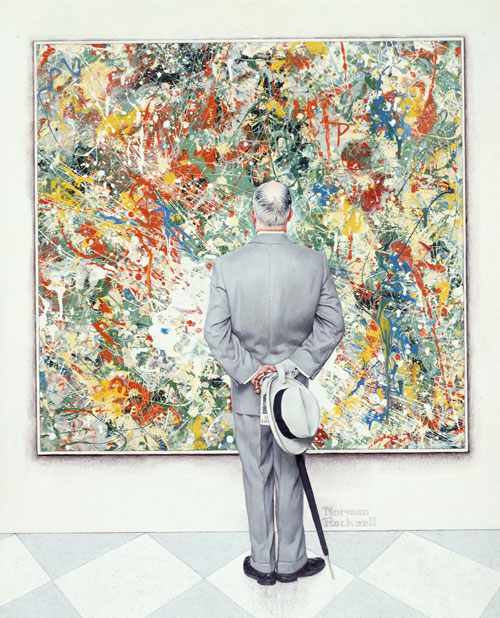
I had struck gold. Continue reading “Rethinking Rockwell”
Disturbed
Professor McCoy has been grilling me to do some “unpacking” on why I believed that the sex in Frenzy, by Percival Everett, was so “disturbing”, so I will. Now I do want to provide some meta-commentary, but it is going to be quite graphic and very awkward, which is why I never did “unpack”.
The Debate about Academic Disciplines
In Joe Moran’s book, Interdisciplinarity, there’s an argument that’s brought up concerning what discipline is superior to others in different academic settings. For example, when someone says that they’re an English major, the general public might respond to them saying, “you must like to read a lot” or, ” what’s the point of earning a degree in a language you already know how to speak?” When it comes to STEM majors, people assume that these students don’t know how to comprehend anything other than equations and calculations. Those holding onto these false perceptions need to be educated on how these disciplines have a common origin and how throughout the years, society applied more prestige to some more than others. Continue reading “The Debate about Academic Disciplines”