
Each week in Professor McCoy’s English 203 class we are often divided into smaller discussion groups to confer on various questions and activities. I thoroughly enjoy being with these smaller groups because I am able to converse with my classmates and listen to their interpretations on the information we read, watch, and discuss in class. These discussions are my favorite part of the class because I can never anticipate what we are going to be advised to talk about and what is going to be brought up as a result of the given assignment. Continue reading “What is the purpose of blogging? Why do we blog?”
Walking Thoughts on Deer

The other morning, I was out on a walk in the village of Geneseo not too far from Highland Park. I was appreciating the general beauty of the leaf-scattered sidewalks and street, admiring the architecture of the buildings around me. There was a fog resting just overhead, lending to the ambience of the scene before me. As I walked, I happened to glance down a street to my left and noticed a figure silhouetted against the grey weather and motley streets. It took a moment for me to realize that the figure staring back at me was a deer. The deer was tense and startled by my presence and yet, I could not help but observe that the deer also appeared to me as forlorn, in the way that it turned to me. It stared at me a moment then turned slowly and walked off into a backyard. The deer left me feeling strangely melancholy and saddened. I pondered for a while, why did this animal going about its business, strike me in such a manner?
Many Worlds, Many Meanings
The end of I am Not Sidney Poitier left my thoughts swirling with different theories regarding Not Sidney’s eventual fate. The novel spirals towards its ambiguous conclusion when Not Sidney decides to acquire 50,000 dollars in cash so that he can fund the construction of a church for the nuns he encounters during his time in Smuteye. In order to procure the necessary funds, Not Sidney travels to Montgomery, Alabama, alone.
Never know what to expect
I Never know what to expect in my English 203 class. One day we can have a conversation about the material we read. While in another we can talk about MGM’s Leo the lion and the copy cat version using a kitten by MTM. It is always a surprise that I enjoy coming too twice a week.
Continue reading “Never know what to expect”
Questions and Mantras

In a previous post, I wrote about the issues of apathy in the culture of the U.S. Although I have tried to move past apathy, I have not been able to. I think that apathy is a highly important issue in contemporary times. It is also, thankfully as something I am a little obsessed with it, highly relevant to readings and discussions in the class I am writing this blog post alongside.
As I discussed in the post that I mentioned above, the character of the god Dionysus, both in Frenzy by Percival Everett and Euripides ancient play The Bacchae, is highly apathetic. Apathy in a god is fitting and expected yet, high levels of apathy in humans can be quite dangerous. The theme of apathy and distance from one’s self and by extension one’s surroundings are a prevenient theme in Everett’s work. The character of Dionysus is highly apathetic in Frenzy, but also in Everett’s work I am Not Sidney Poitier, the character of Ted Turner could be seen as very apathetic. Ted Turner is the appointed guardian of Not Sidney, the protagonist. Despite this, Turner is constantly putting distance between himself and Not Sidney acting aloof and distant in many of Not Sidney’s times of need. For example, at one point in the novel, Not Sidney is very upset because he is staying with a racist family and calls Turner for comfort and advice. Not Sidney explains the dynamic and details of his situation making it glaringly apparent that he upset. Turner gives very unhelpful advice and no comfort whatsoever and quickly ends the phone call because he is “off to Montana tomorrow” [Everett 147]. This is but one example of Turner’s apathetic distance from Not Sidney.
Although there are many instances of apathy throughout both of the novels, it is a sickening issue far beyond the content of books. The issue of apathy is highly relevant to now. Although, I have begun to realize that apathy is only a single ingredient in a sad meal that is being fed to U.S. culture. The recipe consists of apathy combined with boredom which then almost certainly leads to pacification. This meal is very dangerous because when in a state of pacification, it is very easy for an entity to be influenced. To what end U.S. culture is being influenced, I do not know.
Another Look at Ecstasy
In my last post, I brought up the idea of ecstasy in the lives of human beings. For this post, I will focus more on ecstasy within literature. Ecstasy has a few definitions, one of which I talked about in my last post is a level of happiness, but another definition focuses on the sexual connotations of ecstasy. Where I noticed this the most was in The Bachhae, and specifically in the women under Dionysus’ control. However, the more I thought about how these women were being controlled, the more I began to think that maybe if they knew what was going on they wouldn’t mind it. Continue reading “Another Look at Ecstasy”
The Jim Crow Museum and Original Sin
Last Monday in class, we watched a documentary about the Jim Crow Museum of Racist Memorabilia. The museum collects racist items from American history and displays them to the public to raise awareness. In this film, Dr. David Pilgrim, the museum founder, talks at length about how guests in the museum try to psychologically distance themselves from the hateful things they see. Pilgrim mentions how people look for the least offensive things they can find and question why they are in the museum. He says that people also argue that the things featured in the museum are simply part of the past and that we as a society should just forget about them. This sense of denial permeates the film and is reflected in many of Pilgrim’s interactions with sellers. Continue reading “The Jim Crow Museum and Original Sin”
What’s in a Word?
This week, I’ve decided to finally buckle down and put some thought into a recurring quote from our class. All semester, Dr. McCoy has told us in various contexts “[i]t is incredible that a sentence is ever understood”, a quote from Percival Everett’s Erasure. I think, at last, the quote is beginning to resonate with me, especially as our class nears the end of another Everett novel, I am Not Sidney Poitier. The book and quote combined have me considering language itself: the weight of our words, the importance of our statements, and the unpredictability of meaning.
“What’s wrong with your eye?”
Written and revised by:
Marc Choi, Brianna Linn, Lael Truth, Brian Vargas, and Christina Yi
“What’s wrong with your eye?… Looks like the boy’s gonna pop” (Everett 19)
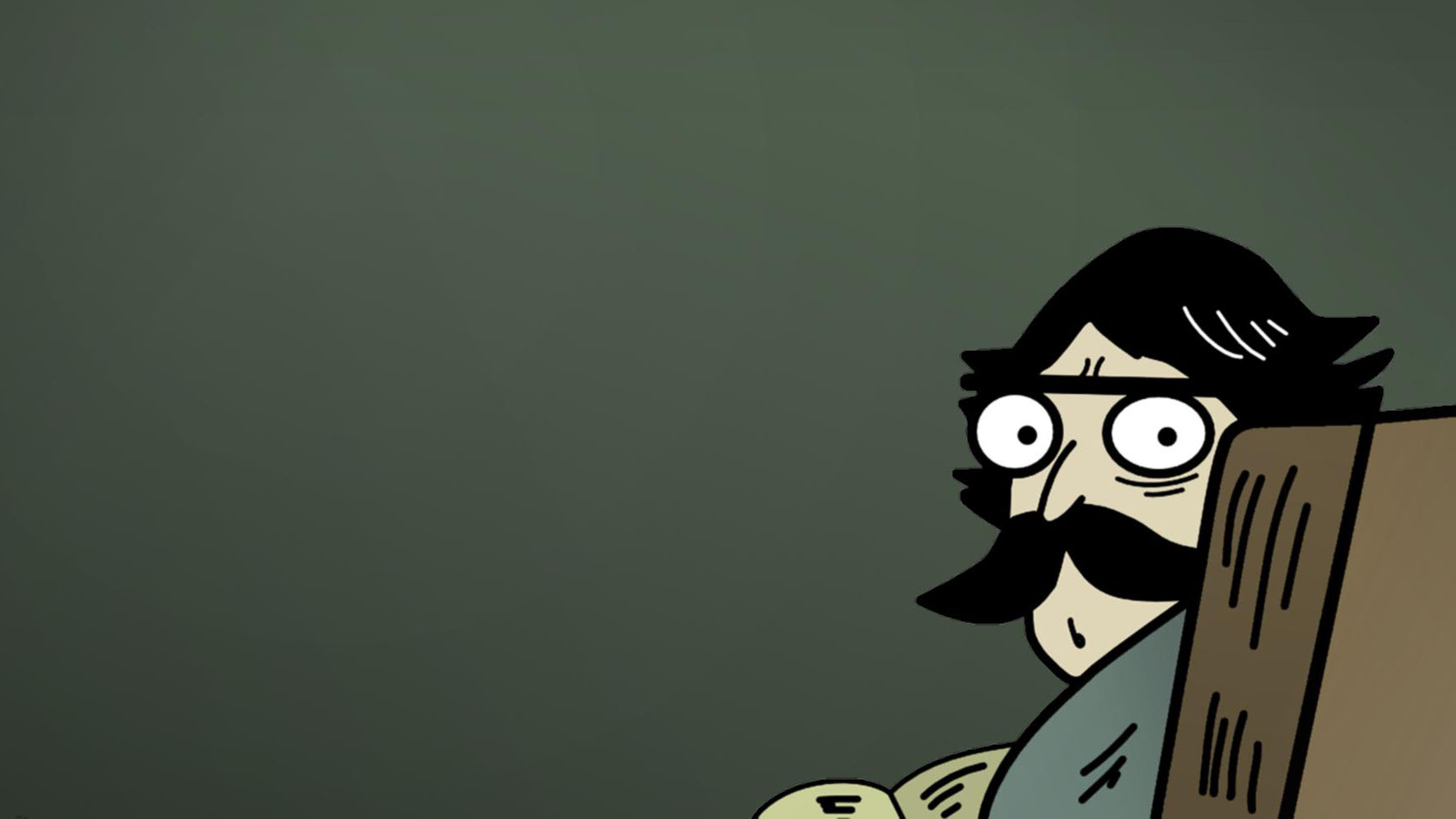
We imagine this image, a portion of the “Staredad” meme, to be an accurate representation of the famous fesmerizing stare used constantly by the protagonist Not Sidney Poitier in Percival Everett’s novel I Am Not Sidney Poitier. The image above depicts a man with an apparently crazy and dazed stare, who possesses an extremely powerful gaze. While it may introduce a feeling of uncomfortability, it also gives rise to the question: “Can a look so stern give someone the power to control others?”.
Metacommentary: All About Balance
Have you ever been told a story where the speaker goes on a tangent about something you cannot understand? Maybe because of the way they phrased it or presented it to you, but it brings about a lot of confusion. Was this frustrating for you, the speaker, or both? It is always hard to communicate effectively, but it is even hard to explain things thoroughly within our writing. The speaker is the writer, you are the reader, and trust me when I say it can be extremely frustrating for the both of you.
There have been so many times in my life where I try to tell a funny story and when I hit the final punchline, my audience just looks at me with a perplexed expression. I often get the dreaded question nobody wants to hear, “Um what?”. This is when internally I roll my eyes and think, “How could they not have gotten that? I was so clear! No way do I want to tell the story all over again”. How could my audience not see how my story had relevance to our previous conversation? This is possibly one of the most frustrating things, and it happens to me on a day to day basis! I do not want to resort to the lazy “nevermind” reply, but I also would rather not rephrase the whole entire story just for them to maybe understand it all over again.